
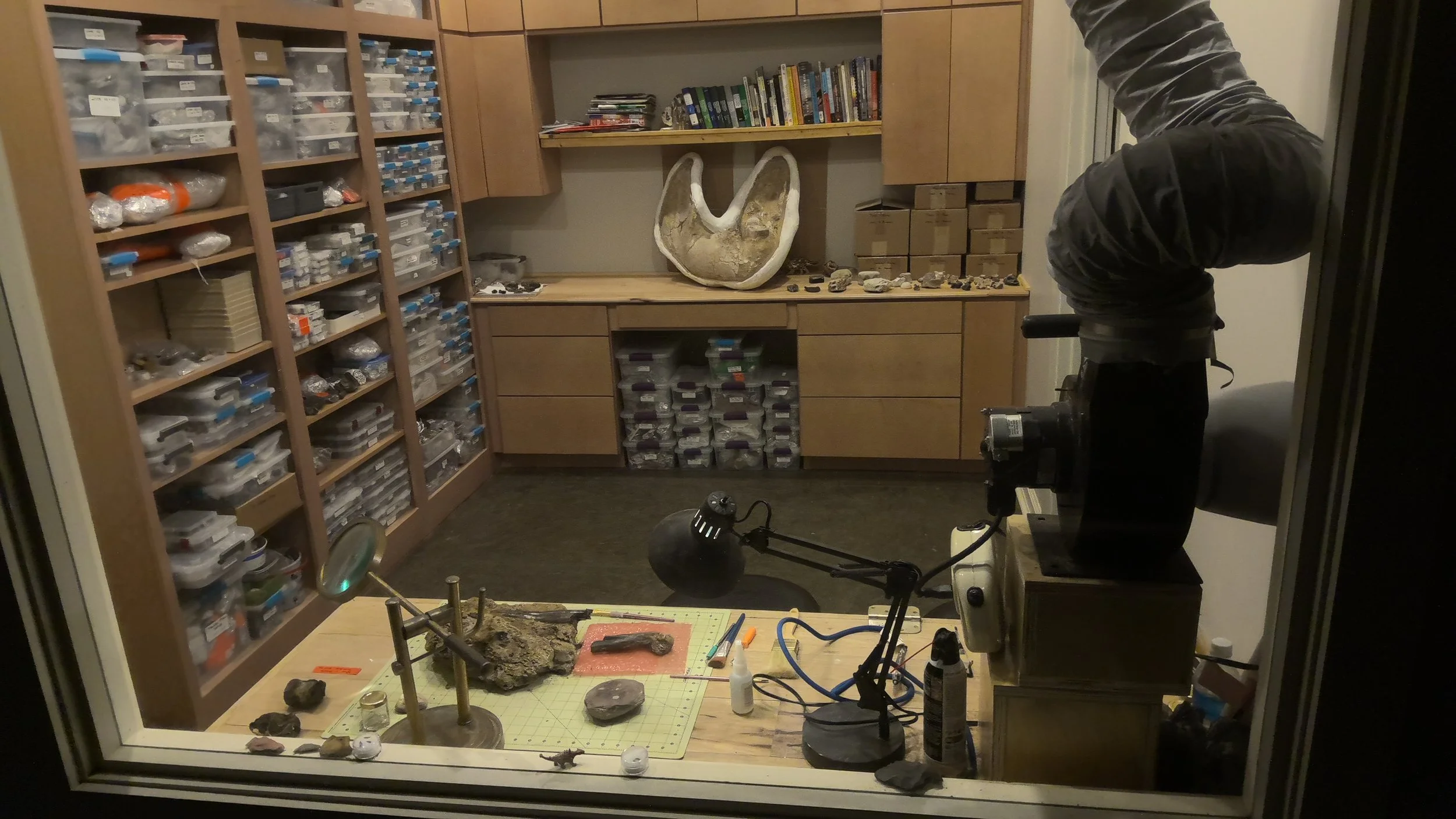
Finding fossils is only the beginning! Stabilizing the fossil in the field, transporting it safely to the lab, and prepping the fossil for display is what consumes most of our time… and we love it!
Prepping fossils for display…
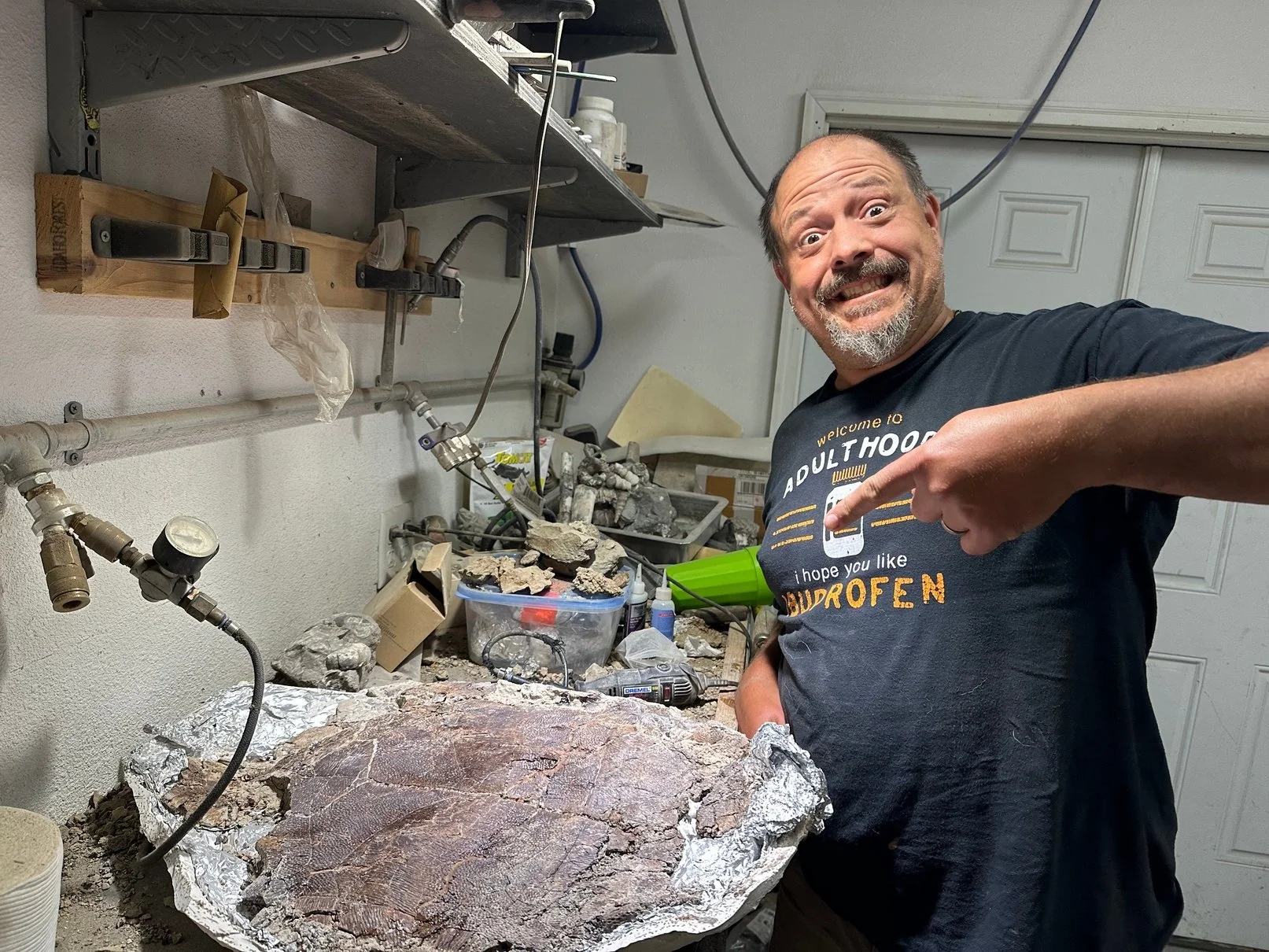
Here’s Tom preparing the shell of a Basilemys, a rare turtle species from the late Cretaceous. This specimen revealed quite a story! During excavation, we discovered a tooth embedded in the shell. This alone would not prove predation. However, as Tom prepped the shell, he discovered several parallel scrapes located just above the location of the tooth. That was enough to convince us that this turtle had been eaten by a theropod… and not just any theropod. The tooth allowed us to identify the species as a Nano Tyrannosaurus!
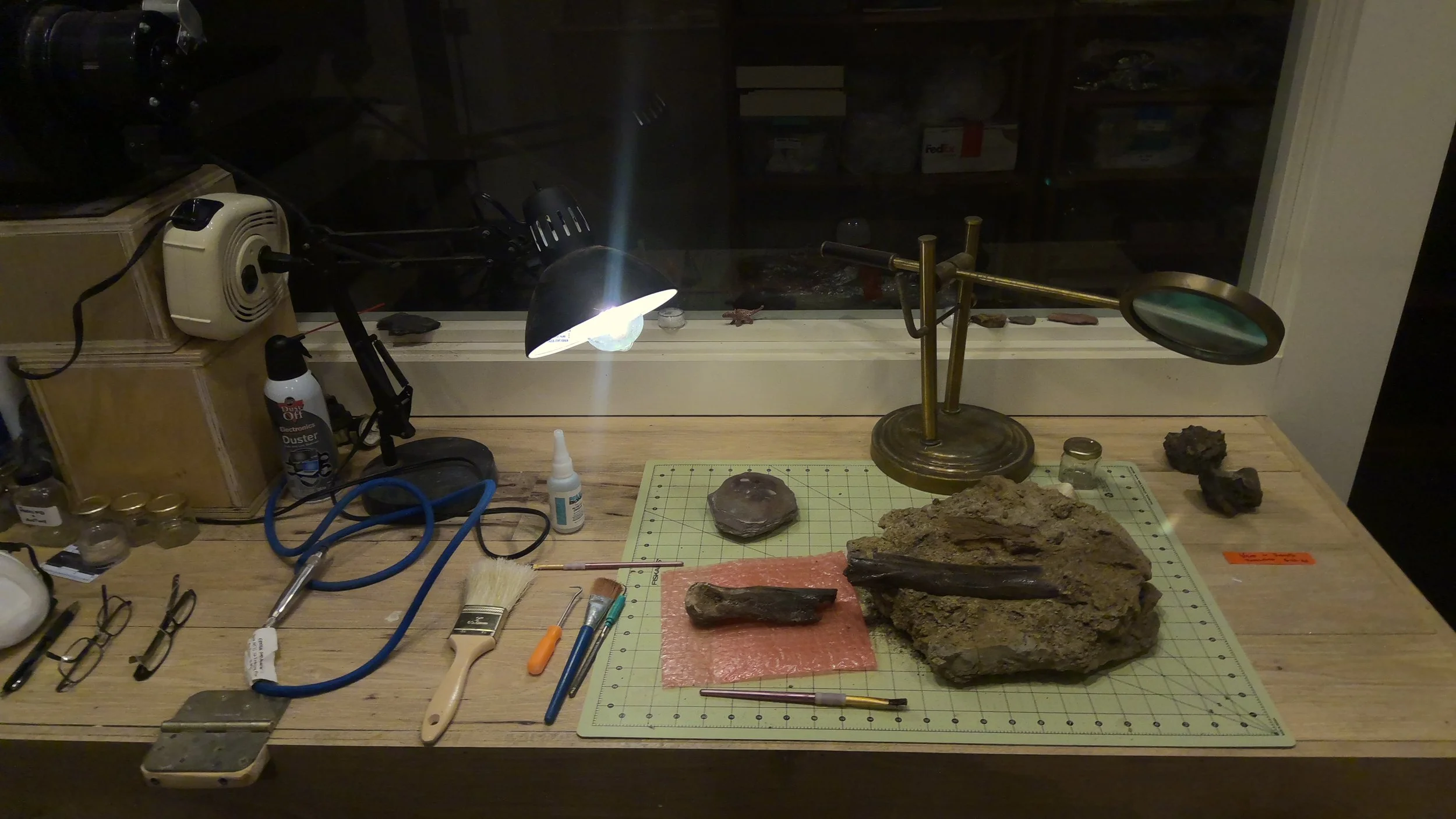
Prepping fossils can be a long and tedious process, especially when using small brushes and dental pics. Luckily, we now have pneumatic tools that speed the process. However, sometimes the fossils are so fragile that using pneumatic tools are just too aggressive and risk damaging the specimen. The fossil on the table above is an example. It’s a hollow theropod bone that had collapsed onto itself from underground pressure. We’ve spent hours manually removing the matrix while stabilizing the bone with penetrating glue as new bone surface was revealed. You may notice that the end of the bone (on orange plastic) separated cleanly along a stress fracture. This is common and can be easily reattached before the specimen is put on display.
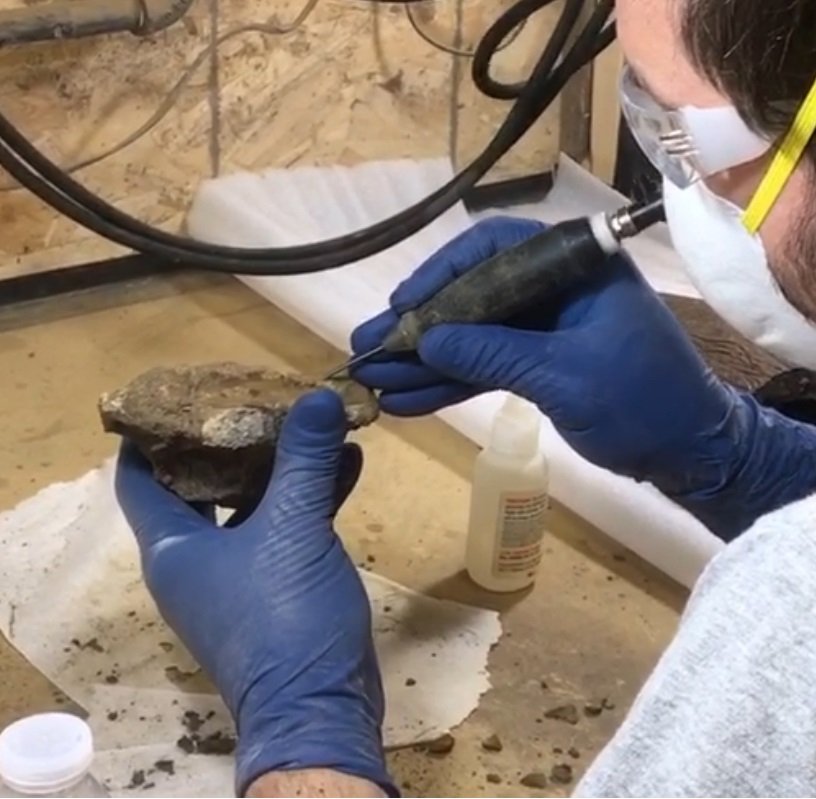
Pneumatic air scribes vibrate a small tip that acts very much like a jack hammer to remove hard matrix.
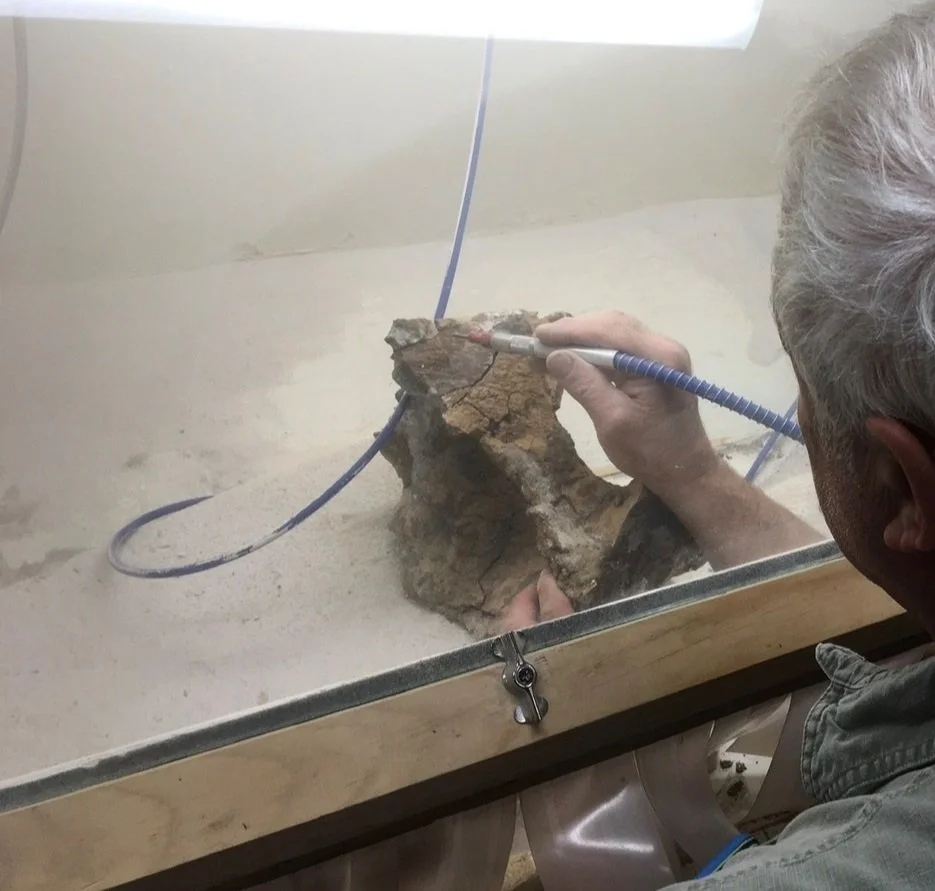
Pneumatic air abraders precisely direct powders of various hardnesses to remove matrix.