
Displaying fossils is our chance to share the countless variety of specimens we’ve discovered, identified, and prepared. Fossils can be a snapshot from the past revealing ecosystems, cataclysmic events, and details from the lives of individual animals including their diet, diseases, injuries, and cause of death.
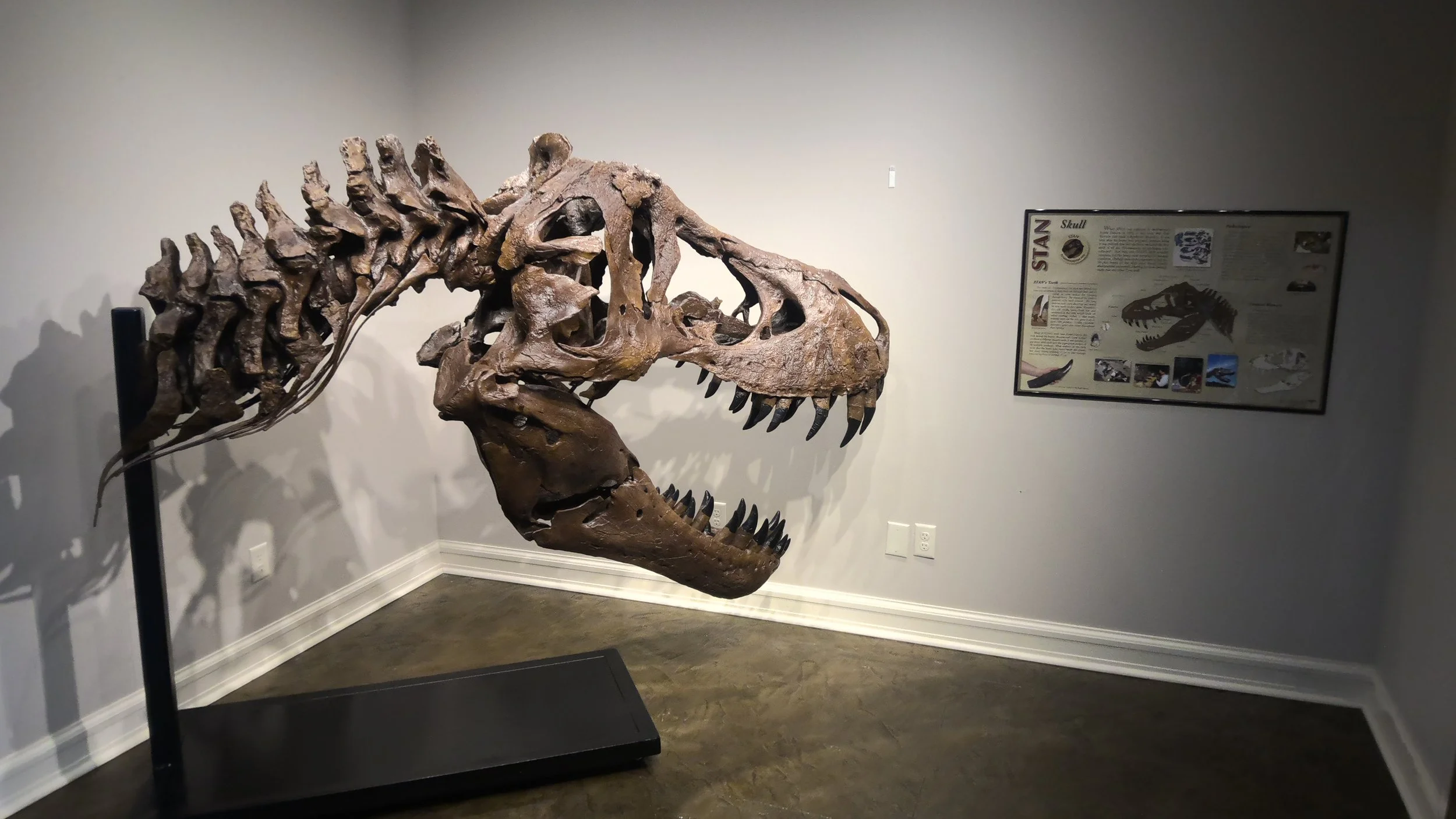
This skull and neck cast of Stan, the T. Rex, was acquired from the Black Hills Institute of Geological Research in South Dakota. The Black Hills Institute excavated two of the most famous T. Rex skeletons found to date! The 90% complete, 40’ long skeleton of Sue, which is now on display at Field Museum of Natural History in Chicago, and the 70% complete skeleton of Stan, which is displayed at the Natural History Museum of Adu Dhabi in the United Arab Emirates.
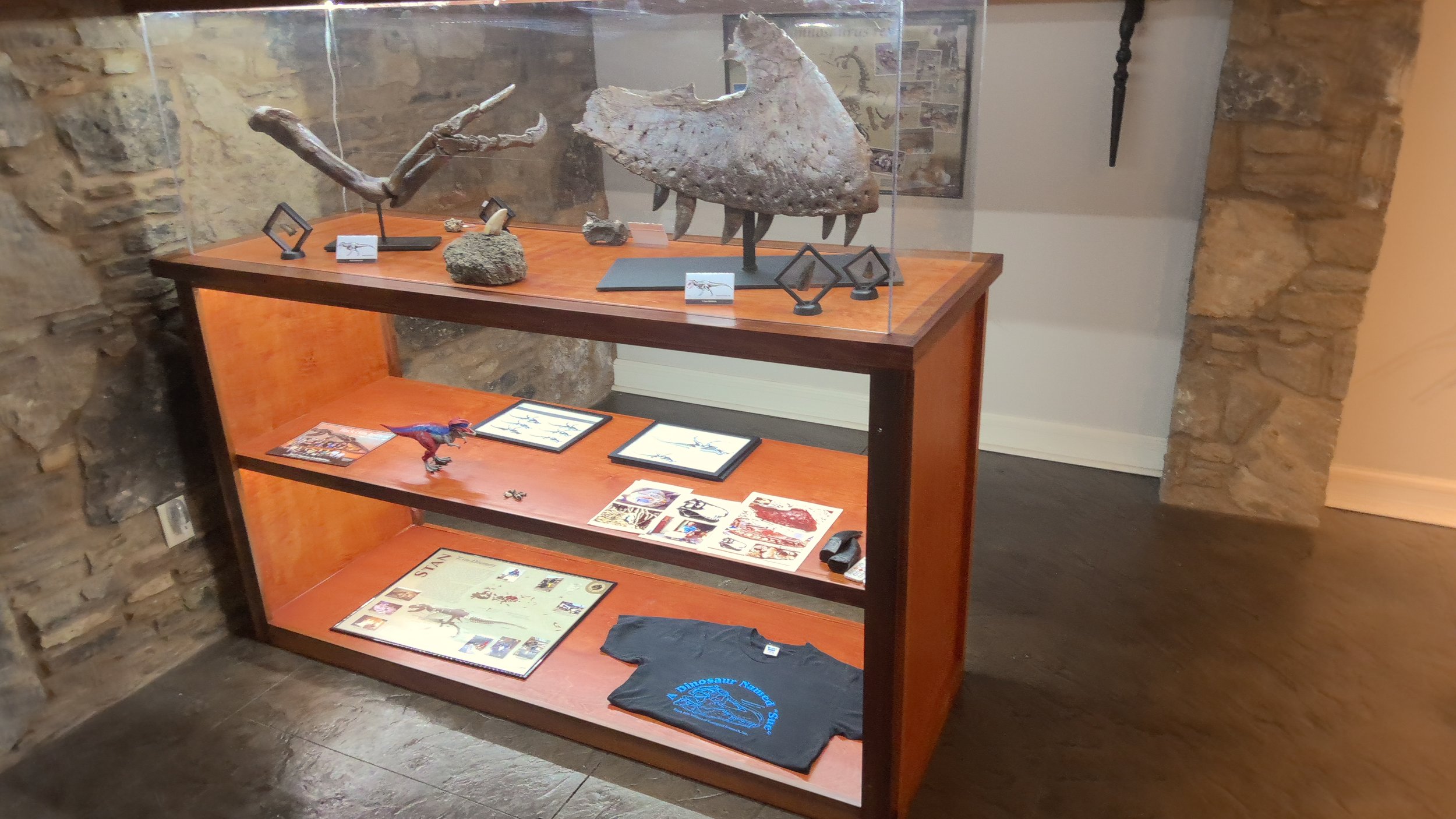
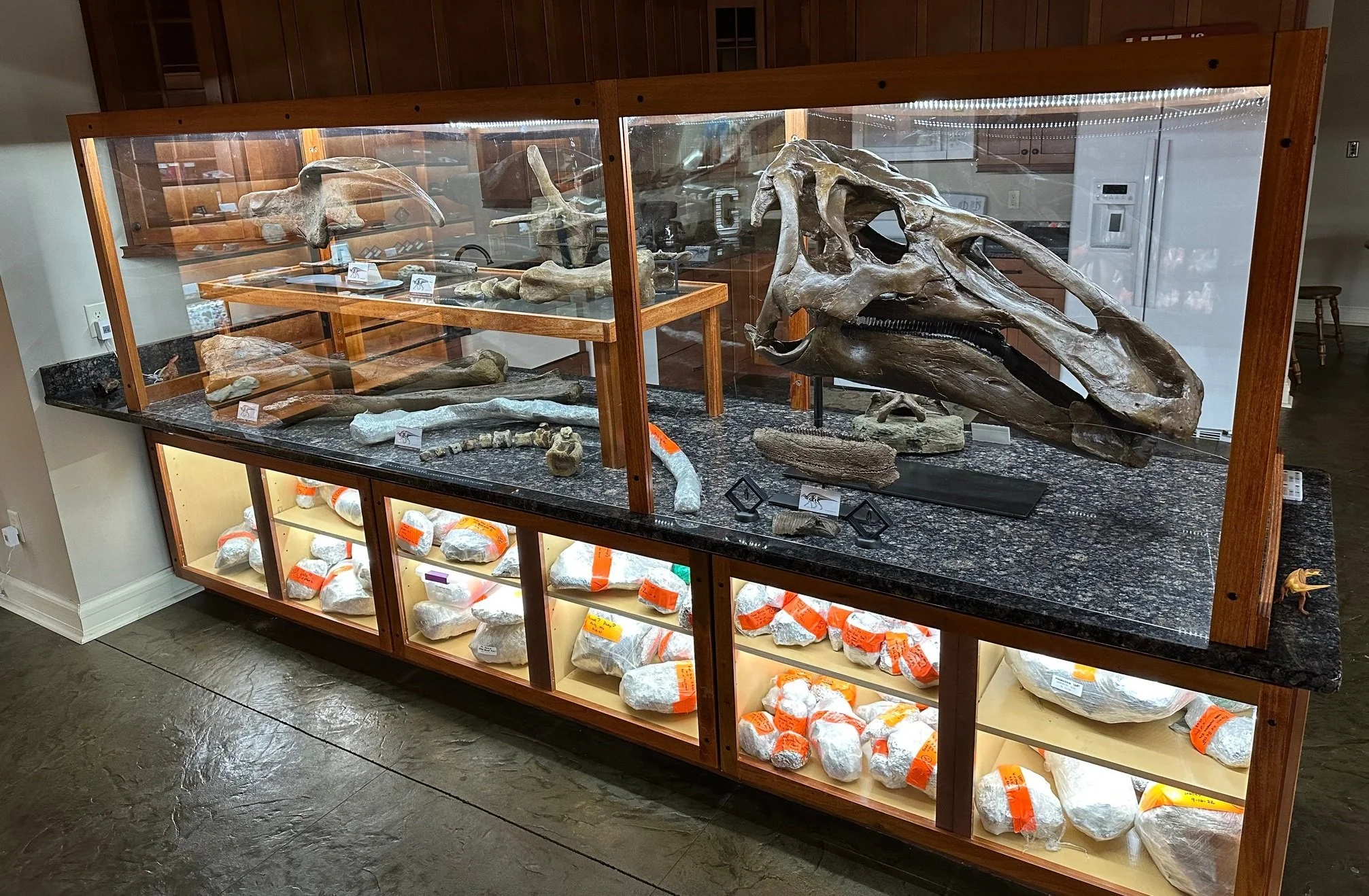
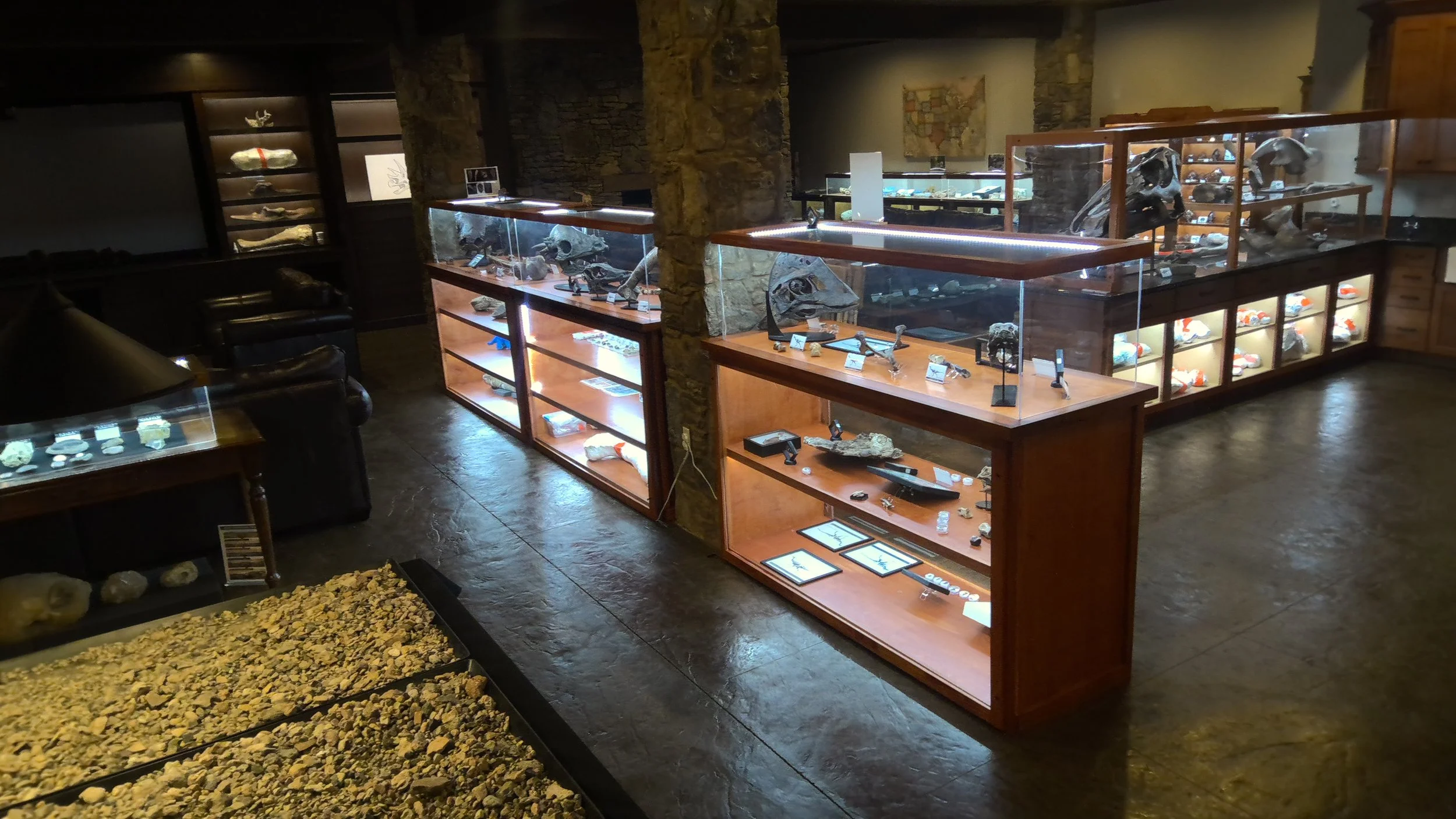
Hundreds of fossils found from around the United States are paired together with professionally made skull casts (like Stan’s above) to give personality to the fossils our family has found. This includes dinosaurs, reptiles, mammals, fish, and many invertebrates including ammonites, trilobites, crinoids, echinoderms, bivalves, gastropods, and many more!